Quick Answer: Pool valve replacement in Jacksonville, FL typically costs between $150 and $600 depending on valve type and labor, and most jobs are completed in a single service visit. Valves wear out faster in Florida's heat and humidity, making routine inspection a critical part of pool ownership here. If you notice water leaking near your equipment pad, loss of suction, or difficulty turning your valves, it's time to call a licensed pool professional.
Key Takeaways
- Jacksonville pools operate 10 or more months per year, putting extra wear on valves compared to northern climates.
- The most common pool valves are gate valves, ball valves, and multiport valves, each with different replacement timelines.
- Signs of a failing valve include visible cracking, water leaks at the equipment pad, and poor circulation even with a clean filter.
- Most valve replacements are best left to a licensed professional due to the need to shut down and re-prime the system correctly.
- Clean & Clear Pools serves Jacksonville, Ponte Vedra Beach, Mandarin, Nocatee, and St. Johns with same-week scheduling on most repairs.
Jacksonville homeowners enjoy their pools nearly year-round. With an average of 233 sunny days per year and mild winters that keep water temperatures swimmable well into November, your pool system works harder than almost anywhere else in the country. That extended workload takes a real toll on equipment, and pool valves are one of the first components to show wear.
When a valve starts to fail, the effects ripple through your entire pool system. Water circulation drops, chemical distribution suffers, and what starts as a sticky handle can quickly become a full-blown leak. Catching and replacing a bad valve early saves you from the kind of repair bills that ruin a summer.
This guide covers everything Jacksonville pool owners need to know about valve replacement: what the different valve types are, how to spot trouble, what the job costs, and when you should call in a pro versus handle it yourself.
Pool Valves 101: What Every Jacksonville Homeowner Should Know
Pool valves are the traffic directors of your plumbing system. They control where water flows, allow you to isolate equipment for maintenance, and make it possible to divert water to cleaners, spa features, or water features without shutting the entire system down.
There are three main valve types you'll find on residential pools in the Jacksonville area.
Gate valves are the oldest design and still common on pools built before 2010. They use a threaded stem to raise or lower a gate inside the valve body. They work well when fully open or fully closed but are not designed for throttling water flow. Over time, the stem seals dry out and crack, especially in Florida's UV-intense environment.
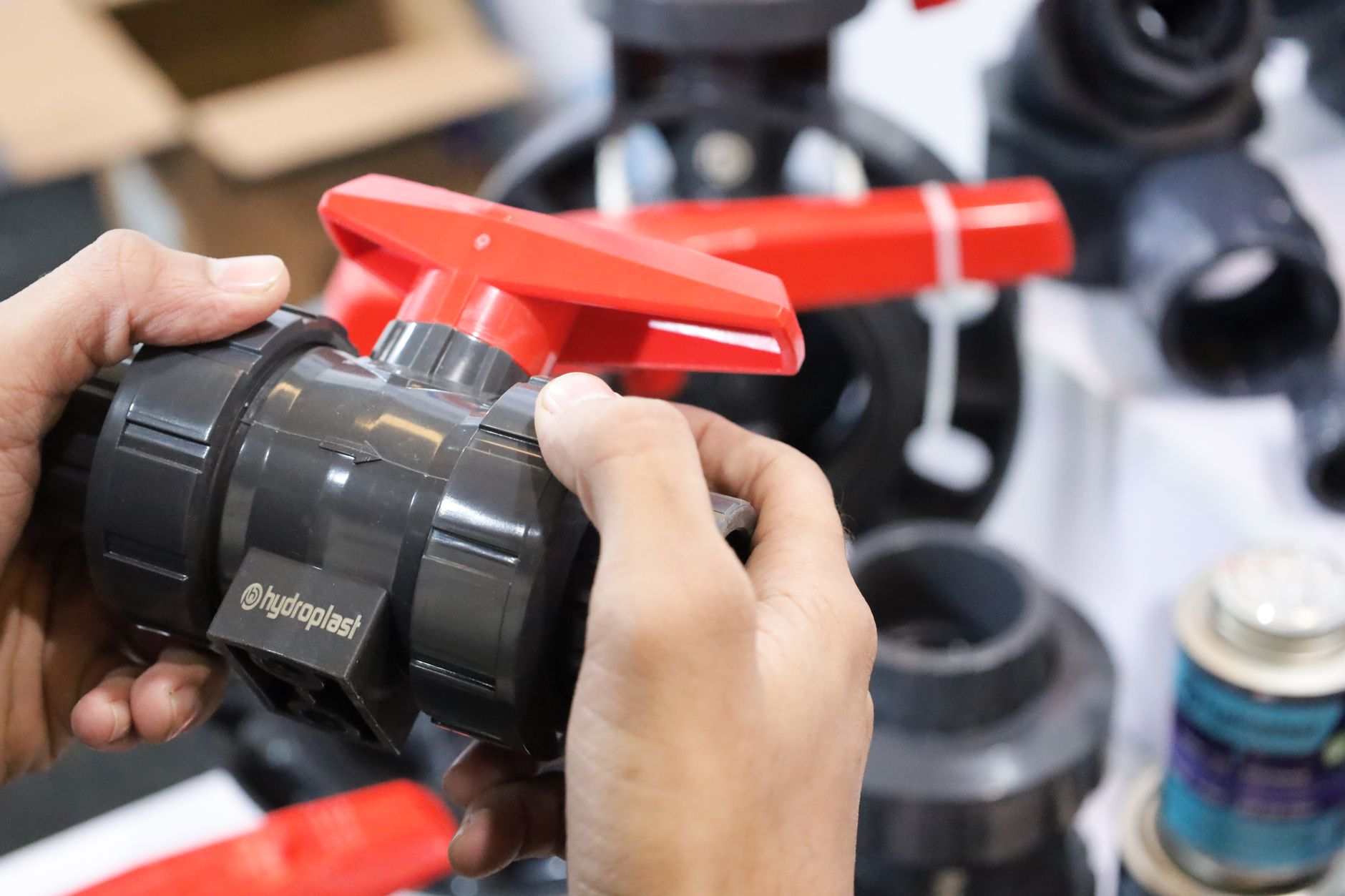
Ball valves are the modern standard on most new installations. A quarter-turn rotates a drilled ball inside the valve, either opening or blocking flow completely. They're durable, easy to operate, and widely available in both PVC and CPVC. Most pool contractors in Jacksonville now use ball valves for all new plumbing runs.
Multiport valves sit on top of your sand or DE filter and control six or more flow positions: filter, backwash, rinse, recirculate, closed, and waste. These are the most mechanically complex valves on your equipment pad and the most expensive to replace. The internal spider gasket is the most common failure point and often wears out every five to eight years under heavy Florida use.
Understanding which valve type you have matters because replacement parts, labor time, and costs differ significantly between them. If you're not sure what's on your equipment pad, a quick photo sent to a local pool professional can get you an accurate quote within minutes.
Pool Valve Replacement in Jacksonville: Signs, Process, and What to Expect
Warning Signs That a Valve Needs Replacing
The earlier you catch a failing valve, the simpler and less expensive the fix. Here are the signs Jacksonville homeowners most commonly report before calling us out for a valve replacement.
Visible cracking or UV damage. PVC becomes brittle after years of sun exposure. If the valve body shows surface crazing, stress cracks near the union fittings, or white chalky discoloration, it's nearing the end of its service life. Florida's intense UV index accelerates this process compared to pools in cooler, cloudier climates.
Water leaking at the equipment pad. A puddle near your filter, pump, or heater that wasn't there before is often a valve seal failure. Even a slow drip can lose hundreds of gallons per month and raise your Jacksonville Electric Authority (JEA) water bill noticeably.
Stiff or frozen handles. A valve handle that's difficult to turn or won't move at all usually means the internal O-rings and stem seals have hardened or corroded. Forcing it risks snapping the handle or cracking the valve body, which turns a simple replacement into a bigger repair job.
Poor circulation despite a clean filter. If your pool looks dull and your return jets feel weak but your filter is clean, a partially closed or stuck valve could be restricting flow. This is especially worth checking if you've recently had any work done near the equipment pad.
Multiport valve bypassing water. If your filter is running on the filter setting but water is still being pushed to the waste line, the spider gasket inside the multiport valve has likely failed. You'll often notice this as a drop in pool water level even when the system is running normally.
The Replacement Process Step by Step
When a technician arrives for a valve replacement, the job follows a predictable sequence. Understanding what they're doing helps you have an informed conversation and makes sure nothing gets skipped.
Step 1: System shutdown and pressure relief. The pump is turned off and the system pressure is bled down before any fittings are touched. Skipping this step risks a dangerous burst of pressurized water.
Step 2: Isolate the valve. Depending on your plumbing layout, nearby valves may be closed to minimize water loss during the swap. On some older systems without proper isolation points, a small amount of water will need to drain from the lines.
Step 3: Cut out the old valve. PVC valves are typically glued in with union fittings or directly solvent-welded into the pipe run. A technician will cut the valve out using a pipe cutter or saw, leaving enough straight pipe to work with on each side.
Step 4: Install the new valve. The replacement valve is dry-fitted first to confirm alignment, then primed and glued using schedule 40 PVC cement rated for pool applications. Union fittings are hand-tightened and then snugged with channel locks, never over-torqued.
Step 5: System restart and leak check. Once the cement has cured, the pump is restarted and the technician checks every connection for drips under pressure. This step is non-negotiable and good contractors will not leave until the system has run for several minutes without any sign of seepage.
The Association of Pool and Spa Professionals (APSP) recommends that all pool plumbing repairs be performed by licensed contractors to ensure the correct materials and methods are used, protecting both the homeowner and the warranty on new components.

Common Mistakes Jacksonville Homeowners Make with Pool Valve Replacement
1. Using the Wrong Valve Type or Schedule Pipe
Not all PVC fittings are created equal. Pool plumbing requires schedule 40 or schedule 80 PVC rated for continuous pressure. Some homeowners pick up cheaper irrigation-grade fittings at a big box store, and those components are not rated for the same pressures or chemical exposures. The valves may hold initially but often fail within a season, especially in Jacksonville's heat where water temperatures in underground pipes can climb well above comfortable air temperature.
2. Skipping the Pressure Test After Installation
A valve that looks sealed at zero pressure can still weep when the pump spins up. We see callbacks regularly from DIY installs where the homeowner glued everything in, turned the system on, and assumed it was fine because nothing was gushing. A slow seep at a union fitting, left unaddressed, will eventually undermine the surrounding soil and concrete deck. Always run the system for at least ten minutes and get eyes on every joint before calling the job done.
3. Forcing a Stuck Valve Instead of Replacing It
When a gate valve or ball valve stops turning, the instinct is to grab a wrench and apply more torque. This almost always cracks the valve body or shears the handle shaft, and now you have an emergency rather than a planned repair. If a valve won't turn by hand, it's telling you it needs to be replaced, not muscled into submission.
4. Ignoring the Multiport Valve Spider Gasket Until It's Too Late
The spider gasket inside a multiport valve wears gradually, and homeowners often don't notice the slow water loss it causes until their pool is inches below normal level. In Jacksonville, where pool water is already evaporating faster than in cooler climates, a gradual leak is easy to attribute to evaporation. If your pool consistently drops more than a quarter inch per day, the multiport gasket deserves a close look before you assume it's evaporation or a liner leak.
5. Not Allowing Adequate PVC Cement Cure Time
This is one of the most common DIY mistakes on the books. Standard PVC cement needs 30 minutes of cure time before the joint sees any pressure, and in humid Jacksonville conditions, full cure can take longer than the label suggests. Turning the pump back on too soon can push a joint loose before the bond has set, leading to a sudden and messy failure. On warm, dry days the cure is faster, but patience here is always worth it.
DIY vs. Hiring a Professional in Jacksonville
This is an honest conversation, not a sales pitch. Some valve work is genuinely within reach of a handy homeowner. Other jobs are better left to licensed professionals, and the reasons are practical, not territorial.
When DIY Makes Sense
Replacing a simple union ball valve on an above-ground or easy-access equipment pad is a manageable DIY project if you're comfortable with basic PVC plumbing. The valve unscrews from union fittings on both sides, you swap in the new one, and tighten everything back up without any cement. This type of repair takes about 30 minutes and parts cost $20 to $50 at most pool supply stores.
Replacing the spider gasket inside an existing multiport valve is also a popular DIY repair. The valve head lifts off after removing a central bolt, the old gasket peels out, and the new one presses into the channels. It's fiddly work but doesn't require cutting pipe. Replacement gaskets are available for most common brands and run $15 to $40.
When to Call a Professional
Any repair that requires cutting into glued PVC, working around the pump motor, or replacing a valve in a tight or buried location is best handled by a licensed pool contractor. Incorrectly cut pipe, misaligned fittings, or cement applied to a wet surface can all result in failures that cause flooding at the equipment pad, damage to the pump motor, or voided equipment warranties.
Florida also requires pool contractors to hold an active license through the Florida Building Commission for work that involves structural or pressurized plumbing components. Hiring a licensed contractor protects you if something goes wrong and ensures the work meets current code, which matters when it comes time to sell your home.
The team at Clean & Clear Pools has completed thousands of jobs across Jacksonville, carrying a 5.0-star Google rating across 135 verified reviews. When you want the job done right the first time, that track record is worth a phone call.
What to Expect: Cost Breakdown for Jacksonville
Pool valve replacement costs in Jacksonville vary based on valve type, accessibility, and whether additional plumbing work is needed. Here are realistic ranges for the most common scenarios.
Union ball valve replacement: $150 to $250 total, including parts and labor. This is the most straightforward swap and usually takes less than an hour on an accessible equipment pad.
Gate valve replacement (solvent-welded): $200 to $375. Cutting out an old gate valve and gluing in a new ball valve requires more prep time and cure time before the system can be restarted.
Multiport valve spider gasket replacement: $150 to $275. The gasket itself is inexpensive, but the technician needs to disassemble and reassemble the valve head and verify proper seating before restart.
Full multiport valve replacement: $350 to $600. This is the most involved valve repair on a residential pool and involves matching the correct valve head to your filter model, cutting out the existing plumbing, and confirming all six positions seal properly.
Multiple valve replacement or complete equipment pad re-plumb: $600 to $1,500 or more. Older pools in Mandarin and Southside Jacksonville sometimes have a collection of aging gate valves that all need updating at once. Doing them together typically costs less per valve than addressing them individually over several service calls.
Think of valve replacement as preventive maintenance on a high-value asset. A well-maintained pool adds between $15,000 and $30,000 to a home's resale value in the Jacksonville market according to data from the National Association of Home Builders. Spending $300 to protect that investment is straightforward math.
Pro Tips from Our Jacksonville Team

After thousands of completed pool service calls across Jacksonville, Ponte Vedra Beach, Nocatee, and surrounding communities, our technicians have picked up a few things that don't show up in instruction manuals. Here's what we tell our customers.
Tip 1: Inspect your valves every time you clean your filter. Your filter cleaning schedule, ideally every three to four months in Florida, gives you a natural opportunity to look over the entire equipment pad. Check for UV cracking on valve bodies, feel whether handles turn smoothly, and look at the ground under the pad for any damp soil that might indicate a slow drip. If you need help keeping up with filter maintenance, our Pool Filter Cleaning service makes this easy.
Tip 2: Upgrade aging gate valves to ball valves when you replace them. Gate valves belong to a previous generation of pool plumbing. When one fails, we almost always recommend replacing it with a ball valve rather than a like-for-like swap. Ball valves are more reliable, easier to operate, and are far less prone to the stem seal failures that make gate valves problematic after a decade in Florida conditions.
Tip 3: Paint exposed PVC valves and pipes with latex paint or UV-resistant pipe wrap. This is one of the simplest and least expensive ways to extend the life of your plumbing. A coat of white exterior latex paint blocks UV radiation and can add years to the life of exposed PVC on your equipment pad. It takes about 15 minutes and costs almost nothing.
Tip 4: Keep your valve handles accessible and labeled. On pools with multiple valves, especially those with spa features or water features, it's worth labeling each valve handle with its function using a weatherproof marker or label maker. When a technician arrives for a service call, clear labels speed up the diagnostic process and reduce the chance of the wrong valve being operated during maintenance.
Tip 5: Schedule valve work during fall, not summer. Valve repairs involve shutting down your pool system for several hours while cement cures. Scheduling that work in October or November, when your pool is getting lighter use, minimizes disruption. Summer emergency repairs happen, but a planned fall checkup on aging valves is always less stressful for everyone. Our Weekly Pool Cleaning customers often schedule their annual equipment inspections at the same time.
Tip 6: Don't wait for a full failure. A valve that's getting stiff or showing early cracks isn't going to heal itself. In our experience, homeowners who address early warning signs spend about half what they would have spent if the valve had failed completely. A cracked valve body during peak pool season can leave the system inoperable for days while parts are sourced. Early action keeps your pool running and your costs down.
For a broader look at how we approach pool care across the area, visit our Service Area page or read more About Us and our approach to pool service.
Frequently Asked Questions
How long does a pool valve replacement take in Jacksonville?
Most single valve replacements are completed in one to two hours, including the time needed to let PVC cement cure before restarting the system. More involved jobs, like replacing multiple valves or a full multiport valve on a complex plumbing layout, may take three to four hours. Your technician will give you a time estimate before starting work. We schedule most valve replacement appointments within the same week of your call, depending on current demand.
How much does pool valve replacement cost in Jacksonville, FL?
Costs range from about $150 for a simple union ball valve swap up to $600 or more for a complete multiport valve replacement. The main variables are valve type, whether the valve is union-connected or solvent-welded into the pipe run, and the accessibility of your equipment pad. Getting a written estimate before the work begins protects you and ensures there are no surprises on the final bill. Most reputable pool companies in Jacksonville will provide a no-obligation quote on site.
How do I know if my pool valve needs to be replaced versus just repaired?
If the valve body itself is cracked or showing structural damage, replacement is the only safe option. Valves with failing stem O-rings or spider gaskets can sometimes be repaired by replacing the internal seals without swapping the entire valve, which is more economical when the valve body is in good condition. A qualified technician can assess this during a service visit and give you a clear recommendation. When in doubt, replacing an aging valve is nearly always more cost-effective than repeated seal replacements over time.
Can I replace a pool valve myself in Jacksonville?
Simple union-connected ball valve swaps are within reach for confident DIYers who are comfortable with basic plumbing. However, any repair that involves cutting PVC pipe, working around pressurized fittings, or replacing a multiport valve should typically be left to a licensed pool contractor. Florida law requires licensed contractors for pressurized pool plumbing repairs, and incorrect repairs can void equipment warranties. If you're uncertain, a professional quote is usually free and gives you a concrete cost comparison for the DIY versus pro decision.
How often do pool valves need to be replaced in Jacksonville's climate?
Under normal conditions, quality ball valves last 10 to 15 years, while multiport valve spider gaskets typically need replacement every five to eight years depending on usage frequency and water chemistry. Jacksonville's intense UV exposure, heat, and year-round operation shorten those timelines compared to pools in northern climates that are seasonally shut down. Regular inspections, UV protection on exposed PVC, and proper water chemistry all help maximize valve lifespan. Pools in communities like Nocatee and Ponte Vedra Beach that run heating systems year-round tend to see slightly faster valve wear due to higher cycle counts.
What happens if I ignore a failing pool valve?
A partially failed valve can cause poor circulation, which leads to chemical imbalances, algae growth, and increased pump strain. According to the U.S. Environmental Protection Agency, poorly circulated pool water is less effective at distributing disinfectants, which can create water quality and safety issues. A fully failed valve can result in flooding at the equipment pad, pump motor burnout from running dry, and structural damage to the surrounding concrete or pavers. What starts as a $200 valve replacement can become a $1,500 or more repair bill if left unaddressed.
Do I need a permit to replace a pool valve in Jacksonville?
Simple valve replacements that are like-for-like and don't alter the plumbing layout generally do not require a permit through the City of Jacksonville permit office. However, any work that involves changing the routing of plumbing, adding new lines, or modifying the equipment pad layout may trigger permit requirements. Your pool contractor should be familiar with current local requirements and can advise you accordingly. Licensed contractors handle permitting as part of their standard process on jobs that require it.
How do I choose a reliable pool valve replacement company in Jacksonville?
Look for a company with an active Florida pool contractor license, verifiable local reviews, and clear written estimates before work begins. A contractor who can explain the valve types on your specific equipment and describe the exact replacement process is demonstrating real expertise, not just a sales pitch. Ask whether they carry the parts needed for your valve type on their service vehicle, as this affects how quickly the job can be completed. Word of mouth referrals from neighbors in your community, especially in tight-knit neighborhoods like Mandarin or Southside Jacksonville, are also a reliable way to find contractors with a proven local track record.
What should I do to maintain my pool valves and prevent early failure?
The single most effective thing you can do is turn each valve handle at least once every few months, even if you don't need to change its position. Valves that sit in one position for years develop stiff seals and corroded stems that are far more likely to crack when finally operated. Keep your equipment pad clear of debris and vegetation to ensure the valve bodies get adequate airflow and to make visual inspection easy. Applying UV-protective paint or pipe wrap to exposed PVC fittings is a simple step that extends component life noticeably in Florida's sun. Pair these habits with consistent water chemistry maintenance and your valves will reach their full service life.
Ready to Get Started?
If your pool valves are showing any of the warning signs covered in this guide, don't wait for a full failure to deal with it. The team at Clean & Clear Pools handles pool valve replacement across Jacksonville and surrounding communities, getting most jobs scheduled within the same week.
We're proud to carry a 5.0-star Google rating based on 135 verified customer reviews, backed by thousands of completed jobs across the Jacksonville area. Our technicians are licensed, local, and familiar with the specific equipment and conditions found on pools throughout Northeast Florida.
We serve homeowners in Jacksonville, Ponte Vedra Beach, Mandarin, Nocatee, St. Johns, Fleming Island, Atlantic Beach, and Southside Jacksonville. Whether you need a quick valve swap or a full equipment pad assessment, we'll give you an honest evaluation and a clear quote before any work begins.
Call us today at (904) 747-8788 or Request a Free Estimate online. We'd love to help you keep your pool running the way it should.
You can also learn more about our work in your area by visiting our service pages for Pool Service in Ponte Vedra Beach, Pool Service in Mandarin, Pool Service in Nocatee, and Pool Service in Atlantic Beach.
Clean & Clear Pools
7643 Gate Parkway, Suite 104-1230, Jacksonville, FL 32256
Phone: (904) 747-8788 or (904) 747-9636