Quick Answer: Pool stabilizer (cyanuric acid) levels in Jacksonville, FL should be kept between 30 and 50 parts per million (ppm) for residential pools. Because Jacksonville averages 233 sunny days per year and pools are in use 10 or more months annually, UV degradation of chlorine is a constant challenge. Proper stabilizer levels keep chlorine working longer, saving you money and protecting your family's health.
Key Takeaways
- The ideal cyanuric acid (CYA) range for Jacksonville pools is 30 to 50 ppm, with a hard ceiling of 100 ppm before serious problems develop.
- Jacksonville's intense UV exposure can burn off unprotected chlorine in as little as two hours on a summer afternoon.
- Over-stabilized pools become resistant to sanitization, putting swimmers at risk even when chlorine reads normal on a test strip.
- Partial water dilution is the only reliable fix for high stabilizer levels, a process that requires planning in a drought-prone Florida summer.
- A professional water test, not a basic strip, is the most accurate way to know where your CYA stands before adjusting anything.
If your pool keeps losing chlorine faster than you can add it, or if the water looks hazy even after a full treatment, pool stabilizer could be the culprit. Jacksonville homeowners deal with this challenge more than most, and it comes down to one simple fact: our sun is relentless. Understanding how stabilizer works, and how to keep it in the right range, is one of the most practical things you can do to protect your pool investment and keep swim days worry-free.
This guide is written specifically for Jacksonville pool owners, from Ponte Vedra Beach and Nocatee to Mandarin and Southside. Whether you manage your own pool chemistry or rely on a weekly service, knowing the basics of stabilizer gives you the confidence to spot problems early and ask the right questions.

What Pool Stabilizer Actually Does (And Why Jacksonville Pools Need It)
Pool stabilizer is cyanuric acid (CYA), a chemical compound that bonds to free chlorine molecules in the water. Without it, ultraviolet radiation from sunlight breaks down chlorine at a startling rate. Research from the U.S. Environmental Protection Agency and pool industry studies consistently show that in direct sunlight, unstabilized pools can lose up to 90 percent of their free chlorine in just two hours.
Think of CYA as sunscreen for your chlorine. It doesn't make chlorine stronger, but it slows the rate at which the sun destroys it. This means your sanitizer actually stays in the water long enough to do its job: killing bacteria, algae spores, and other contaminants.
In a northern state with a four-month swim season, a pool owner might get away with minimal stabilizer and a heavy chlorination schedule. In Jacksonville, that approach fails quickly. Our swim season runs from roughly March through November, and even during winter, a warm sunny afternoon can spike UV exposure enough to stress your pool's chemistry. Pools in communities like Nocatee and St. Johns, where outdoor living is central to the lifestyle, are running virtually year-round.
Stabilizer enters your pool in a few ways. Some chlorine products, specifically trichlor tablets and dichlor granules, contain CYA built into the formula. If you use these products exclusively, your stabilizer level will creep up over time without you ever adding a separate stabilizer product. Liquid chlorine and cal-hypo granules, on the other hand, contain no CYA, so stabilizer must be added separately if you use those options.
The Association of Pool and Spa Professionals (APSP) recommends a CYA range of 30 to 50 ppm for residential outdoor pools as a general standard. For pools in high-UV regions like Northeast Florida, staying toward the middle of that range (around 40 ppm) gives you solid UV protection without the risks that come with elevated levels.
Getting Pool Stabilizer Levels Right in Jacksonville: A Complete Breakdown
Understanding the numbers is the first step. Here is how different CYA levels actually affect your pool, and what to do if you fall outside the ideal range.
Below 30 ppm: Under-Stabilized
If your CYA reads below 30 ppm, your chlorine is vulnerable. On a hot July afternoon in Jacksonville, you can add chlorine in the morning and test the water by 3 p.m. to find almost nothing left. This leads homeowners to over-chlorinate trying to compensate, which raises chemical costs and can cause eye and skin irritation. The fix is straightforward: add cyanuric acid granules directly to the pool water, following label directions for your pool's volume. Retest after 24 to 48 hours.
30 to 50 ppm: The Sweet Spot
This is where you want to be. Chlorine is protected from UV degradation, your sanitizer is effective, and the water is safe for swimmers. At these levels, you should be able to maintain a free chlorine reading of 1 to 3 ppm without excessive chemical use. Most Jacksonville pool professionals, including our team at Clean and Clear Pools, aim for 40 ppm as a reliable midpoint target during peak season.
50 to 80 ppm: Elevated, Watch Closely
Levels in this range start introducing what pool professionals call "chlorine lock" or more accurately, reduced chlorine effectiveness. The CYA binds too tightly to chlorine molecules, slowing the release of the hypochlorous acid that actually sanitizes the water. Your test strip might show 3 ppm of chlorine, but not all of it is in an active, sanitizing form. At this level, increase your chlorine target to compensate and avoid adding any more CYA. Dilution through partial water changes will gradually bring levels down.
Above 80 ppm: Take Action Now
This is the range where pools can become genuinely unsafe. The Florida Department of Health sets a maximum CYA level of 100 ppm for public pools, and many pool professionals use that as a red-line threshold for residential pools too. Above 80 ppm, chlorine becomes so bound that even high free-chlorine readings don't reliably prevent algae growth or bacterial contamination. Pools in Mandarin and Fleming Island neighborhoods often reach this point mid-summer when homeowners are using trichlor tabs weekly without realizing the cumulative effect.
Above 100 ppm: Drain and Dilute
There is no chemical you can add to lower CYA. The only solution is dilution: draining a portion of the water and refilling with fresh water. For a typical 15,000-gallon pool in Jacksonville, draining 30 to 50 percent of the volume and refilling can bring an over-stabilized pool back into range. This should be done thoughtfully in summer, as Jacksonville Water and Sewer usage fees apply and conservation matters during dry periods.
How to Test Accurately
Basic test strips are convenient, but they are not precise enough for CYA. A liquid drop test kit (Taylor or LaMotte brands are well-regarded) gives much more reliable readings. Even better, bring a water sample to a local pool supply store or schedule a professional water analysis. At Clean and Clear Pools, we test for a full panel of chemistry parameters on every service visit, not just chlorine and pH.
Common Mistakes Jacksonville Homeowners Make with Pool Stabilizer
1. Using Trichlor Tabs Exclusively All Season
Trichlor tablets are convenient and popular, which is exactly why they cause so many stabilizer problems in Jacksonville. Each tablet contains about 57 percent CYA by weight. Using tabs as your only sanitizer throughout our 10-month swim season almost guarantees you will hit 80 to 100 ppm by August. The fix is to rotate in liquid chlorine or calcium hypochlorite periodically, especially in spring and fall, so CYA accumulation slows.
2. Testing Only for Chlorine and pH
Many homeowners grab a basic test strip at the hardware store and check two parameters. If chlorine looks fine, they assume everything is fine. But a pool with 90 ppm of CYA can show 3 ppm of free chlorine on a strip while providing almost no real sanitization. Testing CYA at least once a month during swim season is essential in Florida. Visit our Pool Service FAQs page for more on what a complete water test should cover.
3. Adding Stabilizer Without Testing First
Every spring, homeowners stock up on pool chemicals and add stabilizer as a matter of routine, without testing first. If your pool still has elevated CYA from last season, adding more starts the summer in the danger zone. Always test before you add. CYA does not evaporate or degrade naturally, so whatever was in the water at closing is likely still there at opening.
4. Ignoring the Problem Because the Water Looks Clear
A pool can have dangerously high stabilizer levels and still look crystal clear. Clarity is not a reliable indicator of water safety or chemical balance. Many families in Ponte Vedra and St. Johns neighborhoods swim all summer in pools that look perfect but have CYA levels that render chlorine largely ineffective. This is a genuine health risk, as bacteria and algae spores can thrive in under-sanitized water despite clear appearance.
5. Draining Too Much Water at Once Without a Plan
When homeowners discover very high CYA and decide to do a partial drain themselves, they sometimes miscalculate the volume and drain too aggressively. A pool shell that is suddenly exposed to Florida's hydrostatic pressure from groundwater can crack or pop, a costly structural problem. Draining should be done with guidance, ideally with a professional monitoring the process. If you are in a neighborhood with a high water table, such as many areas near Jacksonville's Intracoastal or low-lying communities, this risk is especially real.
DIY vs. Hiring a Professional in Jacksonville
There is a genuine case for both approaches, depending on your situation, comfort level, and how complex the problem is.
When DIY Makes Sense
If your CYA levels are within or close to the ideal range and you are simply maintaining them, this is very manageable as a homeowner. Purchasing a reliable drop-test kit, testing monthly, and adjusting chlorine type based on what you learn is a reasonable DIY routine. Many Jacksonville homeowners in Southside and Mandarin handle their own maintenance successfully with the right tools and a consistent schedule. Check out our Weekly Pool Cleaning service page to compare what professionals handle versus what you might tackle yourself.
When to Call a Professional
If your CYA is above 80 ppm, a partial drain is the solution, and that process involves more complexity than most homeowners realize. Calculating the exact volume to drain, managing refill water to stabilize pH after dilution, and timing the work to avoid structural issues are all professional-level tasks. Similarly, if your pool has gone green while CYA is high, the combination of algae treatment and stabilizer correction requires a coordinated approach. Our Green Pool Recovery service handles exactly these situations.
At Clean and Clear Pools, our team has completed thousands of jobs across the Jacksonville area, and we hold a 5.0-star Google rating based on 135 verified customer reviews. That track record matters when you are dealing with water chemistry problems that have real consequences for your family's health and your pool equipment's lifespan.
The honest answer is this: routine stabilizer monitoring is a reasonable DIY task. Correcting a significantly imbalanced pool is best left to professionals who do this every day across neighborhoods from Nocatee to Atlantic Beach.
What to Expect: Cost Breakdown for Jacksonville
Understanding what these services cost helps you budget realistically and recognize fair pricing. All figures below reflect the Jacksonville market and should be treated as ranges rather than fixed quotes, since pool size, current chemistry, and specific services vary.
Professional Water Testing
A comprehensive professional water test, covering chlorine, pH, alkalinity, calcium hardness, CYA, and phosphates, typically runs $15 to $40 if done as a standalone service. Many pool service companies include this in their regular service visits. It is worth doing at least at the start and midpoint of swim season.
Cyanuric Acid (Stabilizer) Product
CYA granules purchased from a pool supply store or online generally cost $30 to $60 for a five-pound container, which is enough to treat a 15,000-gallon pool from zero to 40 ppm. This is one of the more economical pool chemicals to buy yourself if your only need is raising a low level.
Partial Drain and Refill Service
For an over-stabilized pool requiring a 30 to 50 percent drain-down and refill with chemical rebalancing, expect to pay $150 to $400 depending on pool size and the extent of chemistry correction needed after the water exchange. This is a meaningful cost, but compare it to the ongoing expense of over-chlorinating an ineffective pool all season, or the potential health liability of swimming in inadequately sanitized water.
Weekly Pool Service (Including Chemistry Management)
A professional weekly pool service in Jacksonville, which handles all chemistry adjustments including CYA monitoring, typically runs $100 to $200 per month depending on pool size, features, and service level. This turns a complicated variable into something you simply don't have to think about. For busy families in communities like Nocatee, Fleming Island, and St. Johns, that peace of mind is a genuine value.
Thinking About It as a Home Investment
A pool adds real value to a Jacksonville home, particularly in the upscale neighborhoods we serve. Protecting that investment with proper chemistry maintenance is far cheaper than replastering a surface damaged by corrosive water, replacing corroded equipment, or dealing with a structural repair caused by improper draining. Routine chemistry management, done right, extends the life of your plaster, equipment, and liner by years.
Pro Tips from Our Jacksonville Team
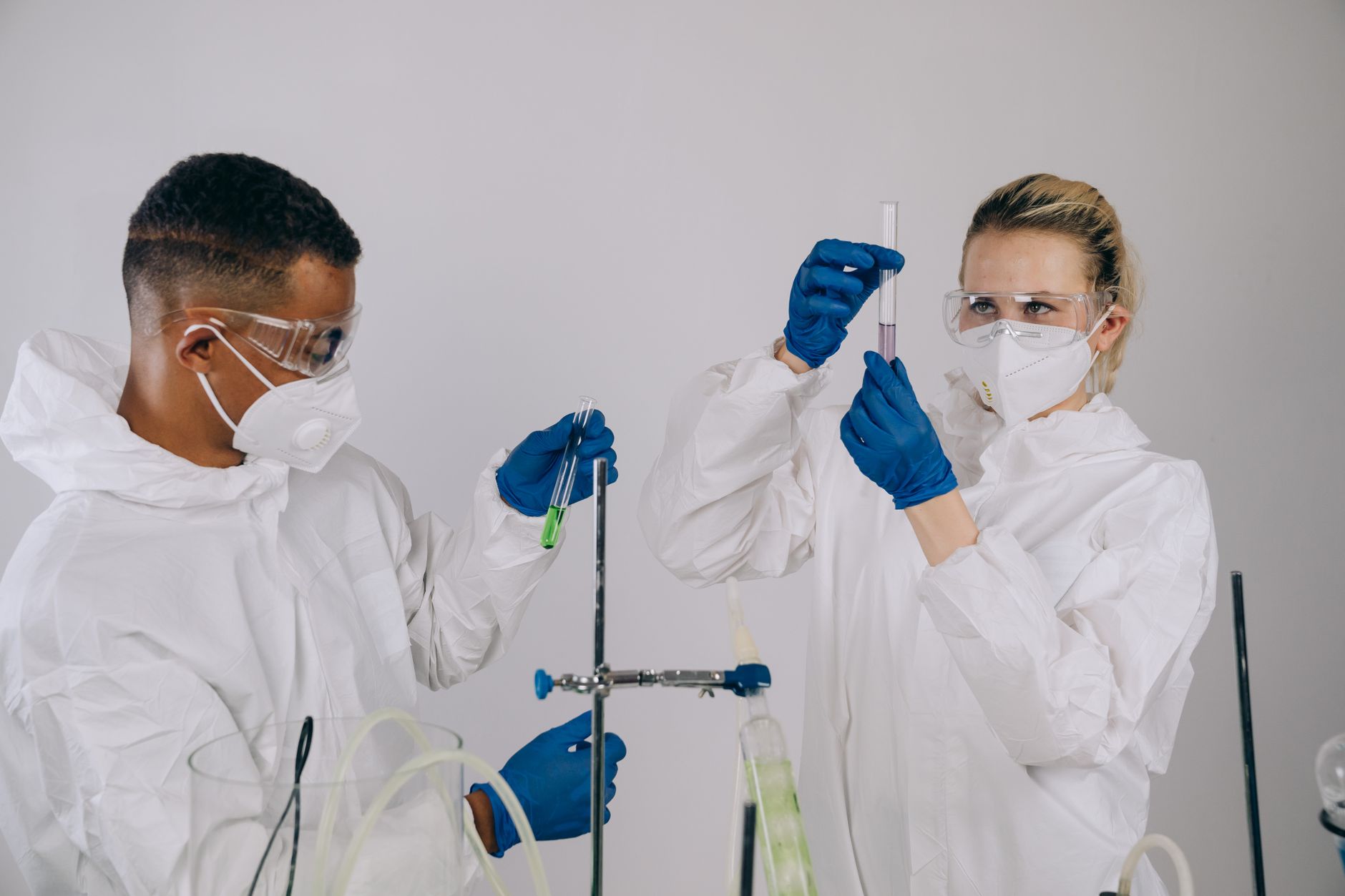
Our technicians service pools daily across Jacksonville, Ponte Vedra Beach, Mandarin, Nocatee, and surrounding communities. Here is what we see working consistently in the field.
Tip 1: Switch to Liquid Chlorine in Peak Summer
From June through September, consider switching from trichlor tabs to liquid chlorine (sodium hypochlorite) as your primary sanitizer. Liquid chlorine adds no CYA to your water, which gives you a natural dilution effect over time as you add fresh water for evaporation. Your CYA level stabilizes rather than continuing to climb. This is one of the simplest habit changes that makes a real difference in Jacksonville pools.
Tip 2: Test CYA Monthly, Not Just at Opening
CYA accumulates gradually, and the problem rarely announces itself dramatically. Monthly testing from March through November lets you catch a rising level at 60 ppm, when a partial water change is easy, rather than at 110 ppm, when you need a significant drain-down. Set a calendar reminder and make it part of your monthly pool routine.
Tip 3: Know Your Pool's Volume Before You Add Anything
Adding chemicals to a pool without knowing the exact gallon volume is guesswork. An overestimate of your pool size leads to overdosing. Measure your pool's length, width, and average depth, then use a volume calculator (your pool professional can help) to get an accurate number. Write it down and keep it somewhere accessible.
Tip 4: Don't Trust Your Eyes on Stabilizer
CYA has no color, no smell, and causes no visible change in water appearance at any level. A pool with 120 ppm CYA can look stunning. This is why the pool industry and organizations like the Consumer Product Safety Commission emphasize regular chemical testing as a safety practice, not just an aesthetic one. Clear water is not the same as safe water.
Tip 5: Account for Stabilizer When Shocking
If you shock your pool with dichlor (a granular shock that contains CYA), you are adding stabilizer every time you shock. In a Jacksonville summer where algae blooms after heavy rain events can prompt multiple shock treatments in a week, this adds up fast. Cal-hypo shock or non-chlorine shock products do not contain CYA and are a better choice when stabilizer levels are already at or near the top of the ideal range.
Tip 6: Schedule a Full Chemistry Analysis After Heavy Rain
Jacksonville's summer thunderstorm season dumps massive amounts of fresh water into pools in short windows. Heavy rain dilutes CYA temporarily, but it also throws off pH, alkalinity, and chlorine. A post-storm chemistry check helps you reset the balance before the sun has a chance to burn off your depleted chlorine. Our team serving areas like Southside Jacksonville and Mandarin makes this check a standard part of rainy-season service visits.
Frequently Asked Questions
What is the ideal pool stabilizer level for Jacksonville, FL?
The ideal cyanuric acid (CYA) range for outdoor residential pools in Jacksonville is 30 to 50 ppm, with 40 ppm being a practical target that balances UV protection with chlorine effectiveness. Jacksonville's high UV index and long swim season mean that some level of stabilizer is genuinely necessary, unlike pools in cooler, cloudier climates where it plays a smaller role. Pools using saltwater chlorination systems may benefit from a slightly tighter range of 60 to 80 ppm per some manufacturer guidelines, but this should be confirmed with your equipment documentation. Always verify with a professional water test rather than relying solely on test strips for CYA readings. Going above 80 ppm creates conditions where even well-chlorinated pools may not adequately sanitize.
How often should I test my pool's CYA level?
For Jacksonville pools in active use, testing CYA monthly during swim season (March through November) is the right frequency. Unlike pH or chlorine, which can shift dramatically within 24 hours, CYA changes gradually, so weekly testing is unnecessary. However, testing only at pool opening and closing is not enough, since CYA can accumulate significantly mid-season if you are using trichlor tablets consistently. After any significant partial drain or refill, test again within a week to confirm the new baseline. Our service packages include regular chemistry monitoring so homeowners don't have to track this on their own.
Can high stabilizer levels make my pool unsafe to swim in?
Yes, significantly elevated CYA levels can create genuinely unsafe swimming conditions, even when the pool looks clear and chlorine reads in the normal range. When CYA binds too tightly to chlorine molecules, the chlorine becomes less effective at killing pathogens like E. coli, Cryptosporidium, and algae. The Florida Department of Health caps CYA at 100 ppm for public pools for exactly this reason. A pool with 110 ppm CYA and 3 ppm free chlorine may provide less actual sanitization than a pool with 40 ppm CYA and 1.5 ppm free chlorine. If you suspect your stabilizer is very high, stop swimming until you can confirm safe levels through a professional test.
How do I lower pool stabilizer levels?
The only reliable way to lower CYA is dilution, meaning you drain a portion of the pool water and refill with fresh water that contains no CYA. There are no chemicals or products that safely and reliably neutralize or remove cyanuric acid from pool water, despite what some products on the market may claim. For a typical Jacksonville pool of 15,000 gallons with CYA at 90 ppm, draining approximately 40 percent of the water and refilling should bring levels closer to the 50 ppm range. This process should be done carefully to avoid hydrostatic pressure issues, particularly in neighborhoods with higher water tables, and a professional should rebalance all chemistry after the refill. Check our Pool Service FAQs for more detail on the dilution process.
How much does it cost to fix a high stabilizer problem in Jacksonville?
Costs vary based on pool size, how far out of range the CYA is, and whether the correction is done professionally or as a DIY project. A partial drain and refill service for a mid-size residential pool in Jacksonville typically runs $150 to $400 including chemistry rebalancing after the water exchange. If you are simply raising a low CYA level, a bag of cyanuric acid granules from a pool supply store costs $30 to $60 and covers most residential pools. Ongoing monitoring through a professional service plan, which prevents these problems from developing in the first place, runs $100 to $200 per month for full weekly service. Catching the problem early at 60 ppm is far cheaper than correcting a severely over-stabilized pool at 120 ppm.
Why does my chlorine disappear so fast in my Jacksonville pool?
In most cases, rapid chlorine loss in a Jacksonville pool comes down to one of three causes: low or absent CYA allowing UV to destroy chlorine, high bather load or debris introducing heavy organic demand, or a combined chlorine problem where the chlorine has bonded to ammonia compounds and become largely ineffective. Testing your CYA first is the right starting point, since it is the most common culprit during our sunny months. If CYA is in range but chlorine still disappears fast, a phosphate test may reveal another piece of the puzzle, as high phosphate levels feed algae and drive up chlorine demand. A professional diagnosis can usually pinpoint the cause within one service visit.
Does my saltwater pool need stabilizer?
Yes. Saltwater chlorination systems produce chlorine through electrolysis, and that chlorine is just as vulnerable to UV degradation as chlorine from any other source. Saltwater pools in Jacksonville absolutely need CYA, and the same general range of 30 to 50 ppm applies, though some salt system manufacturers recommend slightly higher levels of up to 60 to 80 ppm. Check your specific system's guidelines. One advantage of salt systems is that they don't add CYA the way trichlor tablets do, so stabilizer levels tend to be easier to control. However, they still require periodic monitoring and occasional adjustment, especially at the start of a new pool season or after dilution from heavy rainfall.
How do I choose a reliable pool service company in Jacksonville for chemistry management?
Look for a licensed, insured company with verifiable local reviews and a track record in your specific neighborhood. Ask whether technicians test a full chemistry panel (including CYA, phosphates, and calcium hardness) on every visit or just chlorine and pH. A company that provides written service reports and communicates findings to homeowners is worth a premium over one that simply shows up, adds chemicals, and leaves without explanation. Check for consistent reviews that mention specific details, the kind of feedback that indicates real service experiences rather than generic praise. Clean and Clear Pools holds a 5.0-star Google rating from 135 verified reviews and serves Jacksonville neighborhoods including Nocatee, Ponte Vedra Beach, Mandarin, St. Johns, and Southside. You can also review our full service area coverage to confirm we serve your neighborhood.
What happens to pool stabilizer during Jacksonville's rainy season?
Heavy summer rainfall adds fresh, CYA-free water to your pool, which slightly dilutes stabilizer levels. This might seem helpful if levels are high, but the dilution effect from even several inches of rain is modest relative to a typical 15,000-gallon pool. More significantly, rain also dilutes chlorine, drops pH, and introduces organic contaminants that rapidly drive up chlorine demand. The net effect of heavy rain events is usually that your pool needs more attention, not less. After significant storms, testing the full chemistry panel and adjusting accordingly is the safest approach. This is particularly relevant in communities like Fleming Island and St. Johns, where summer storm systems can be intense and consistent.
Ready to Get Started?
Getting your pool stabilizer levels right in Jacksonville's demanding climate doesn't have to be stressful. Whether you need a professional water analysis, help correcting an over-stabilized pool, or ongoing chemistry management through our weekly service plans, Clean and Clear Pools is here to help.
We are a locally trusted Jacksonville pool service company with a 5.0-star Google rating from 135 verified customer reviews and thousands of completed jobs across the area. Our team serves homeowners in Jacksonville, Ponte Vedra Beach, Mandarin, Nocatee, St. Johns, and surrounding communities. Every visit includes a thorough chemical check so your pool stays safe, balanced, and ready to enjoy through every month of our long Florida swim season.
Call us today at (904) 747-8788 to speak with a knowledgeable Jacksonville pool professional. Or, if you prefer, Request a Free Estimate and we will be in touch promptly.
Clean and Clear Pools | 7643 Gate Parkway, Suite 104-1230, Jacksonville, FL 32256 | Phone: (904) 747-8788 or (904) 747-9636